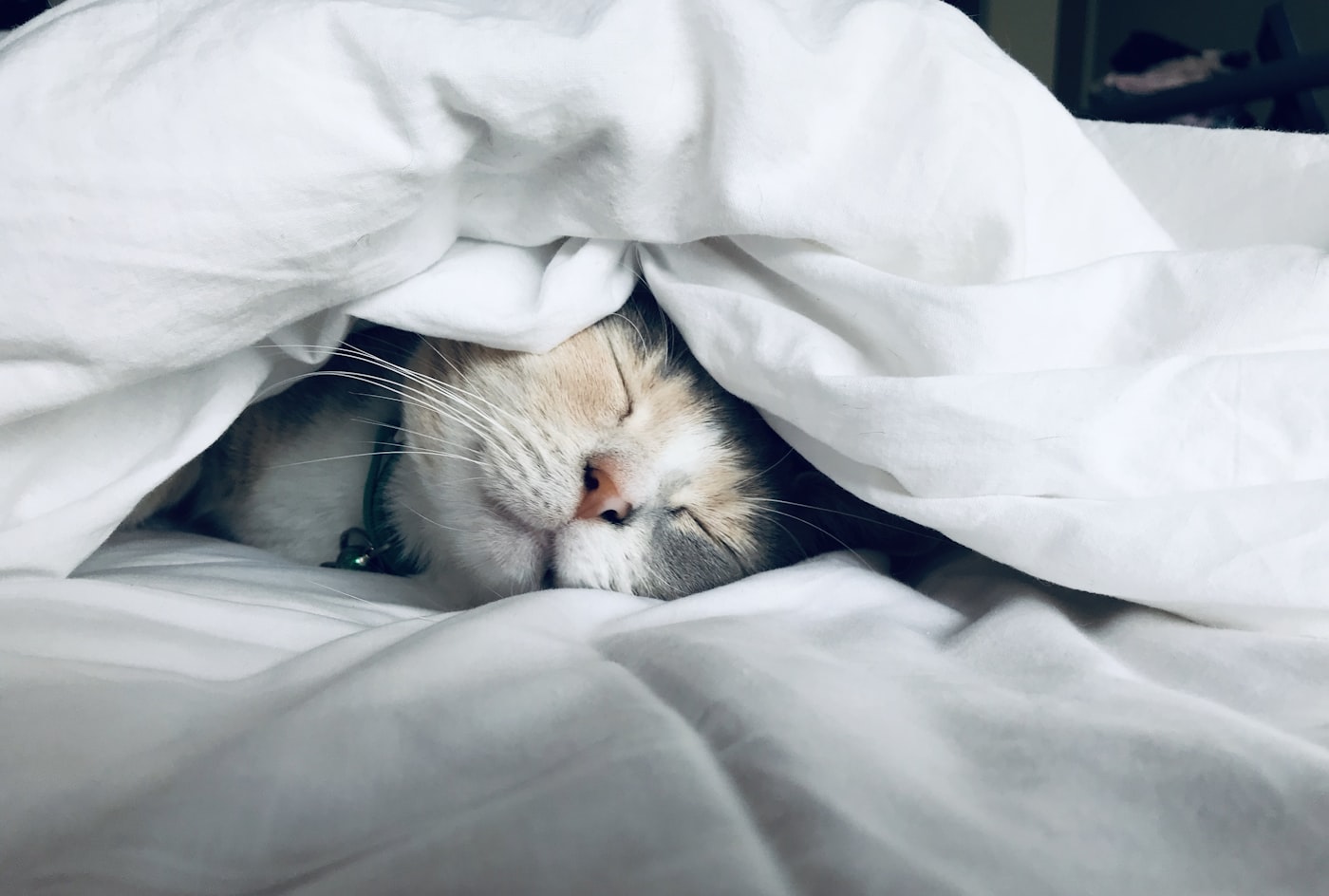
How to Fall Asleep Faster
The small, evidence-backed habits that make the difference between lying awake and drifting off with ease.
There is something quietly absurd about lying in the dark, eyes shut, trying very hard to fall asleep. The effort itself is the problem. Sleep is one of those things — like happiness, or digestion — that resists direct pursuit. You cannot will it into existence, and yet here we are: thousands of people each month searching for ways to do exactly that, fall asleep faster, ideally in five minutes, ideally in forty seconds. The internet has obliged with military techniques and breathing ratios and weighted blankets. I spent six weeks running something closer to an honest experiment — the whole thing is in the sleep notebook — and what I came out with wasn’t a technique. It was a list of things to stop doing.
The framing of faster assumes that falling asleep is a performance you are currently failing at. But most of what disrupts sleep quality isn’t a deficit of skill; it’s an accumulation of decisions made in the hours before bed. Sleep hygiene — a clinical phrase that sounds like it belongs on a hospital pamphlet — is essentially just the discipline of not doing things that disrupt your circadian rhythm. The body runs on light and temperature and habit. When you expose it to bright screens until midnight, eat late, keep the room warm, and then wonder why you can’t drift off, you are not experiencing insomnia so much as cause and effect. My digital detox experiment — cutting screens an hour before bed — had a more immediate effect on my sleep latency than anything else I tried. The darkness matters more than you’d think. Not metaphorically. Literally the darkness.
What I found most useful was not a wind-down routine so much as a wind-down removal — a steady stripping away of inputs. The bedroom cooler, which sounds austere but is simply how the body signals that it’s time. No scrolling, no podcasts designed to be interesting, no films that end at half-past eleven. Melatonin production requires the absence of the wrong light at the wrong time, and the circadian rhythm is not something you can negotiate with. You can work with it, which is slower but more reliable, or you can fight it, which is faster and doesn’t work. Most people looking for a shortcut to falling asleep are actually looking for permission to undo the decisions that made sleep difficult in the first place.
There is also the question of sleep debt — the running deficit that accumulates when you consistently cut the night short and then spend weekends trying to recover. A single poor night is unremarkable. A pattern of them changes how you feel about going to bed at all; the association shifts from rest to effort, and suddenly you are anxious about relaxation, which is its own small catastrophe. The bedtime routine I eventually settled on is almost embarrassingly minimal: cooler room, dim light after nine, a few pages of something with no urgency in it, the same rough time each night. Nothing to track. No supplementation beyond the occasional magnesium if the week has been relentless. The connected habits matter too — hydration, movement, not eating a full meal at ten. I wrote about the hydration piece separately in the hydration habit, because it surprised me how much it affected the quality of sleep, not just how quickly it came.
The honest answer to how to sleep faster is: mostly, stop asking. Build a sleep environment that doesn’t work against you, observe what the last two hours before bed actually look like, remove the most obvious friction. The quiet and the darkness and the cool air are not optimisations — they are just conditions. Sleep isn’t something you achieve. It’s something you get out of the way of.

Wabi-Sabi: The Beauty of Imperfection
The Japanese philosophy of finding beauty in what is incomplete, impermanent, and imperfect — and why it matters now.

How to Find Your Signature Scent
Finding a fragrance that feels like you — not a purchase, but a discovery. A slow guide to navigating perfume.