Kek Lok Si: An Afternoon in Penang's Great Hillside Temple
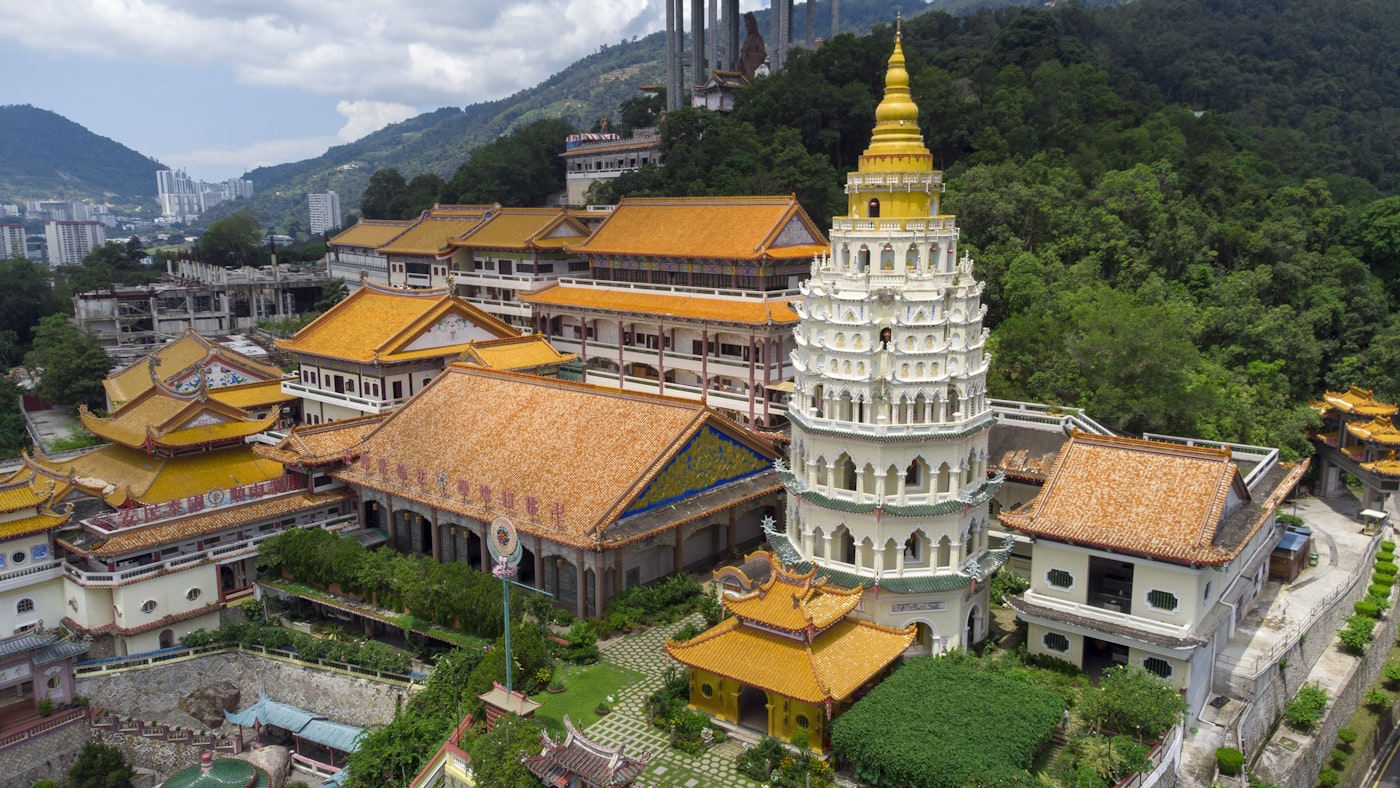
The pagoda climbs in tiers above the rooftops of Air Itam. An essay on the ascent, the layered faith, and what it feels like to arrive somewhere that has been here far longer than you.
The temple announces itself gradually. You take a bus from Georgetown into the hills of Air Itam, and for most of the journey it is an ordinary Penang afternoon — shophouses, motorcycle workshops, a school letting out. Then you round a bend and the pagoda is simply there, seven tiers of it climbing into the haze above the valley, the top of each level ringed with gold, the whole structure too large to quite believe.
Kek Lok Si is the largest Buddhist temple in Southeast Asia. The numbers are available everywhere — the pagoda is 30 metres tall, the grounds stretch across several acres, the construction began in 1890 and has never entirely stopped. I mention them here and then set them aside, because what the numbers cannot prepare you for is the particular texture of the place. This is not a monument. It is a working temple, dense with incense and offering and genuine devotion, and you feel that as soon as you step through the entrance gate.
The lower precincts are loud and market-like: stalls selling joss sticks, plastic Buddhas in a hundred sizes, roasted nuts, cold drinks. I have heard visitors complain about this. I think they miss the point. The commerce and the worship have always existed together here, just as they do in every temple of consequence in Malaysia. The hawker selling ice kacang outside the gates is as much a part of Kek Lok Si as the monks inside it.
You climb. The path through the lower terraces passes a large turtle pond — the turtles are said to bring good fortune and have been donated here for as long as anyone can remember, moving slowly in the green water below the overhang of bougainvillea. Past the pond, past the Hall of the Laughing Buddha, up the covered arcade of souvenir stalls that lines the main approach.
And then you are at the base of Ban Po Thar, the pagoda itself.
The decision to build it in three distinct architectural styles — Burmese at the top, Chinese in the middle, Thai at the base — was not an accident. It was a statement, made in 1930 when the tower was completed, about the nature of Buddhism in this part of the world: a practice that has travelled across many peoples and absorbed many traditions and is not lesser for any of it. Walking the spiralling interior ramp to the upper viewing gallery, I thought about how rarely buildings get to carry ideas this large and this clearly. There are places that are better visited alone, and this is one of them — solitude creates the conditions for that kind of thinking.
The view from the top opens over the whole of western Penang: the rooftops of Air Itam below, Georgetown and the strait in the middle distance, the mainland just visible beyond. It is the kind of view that makes you feel briefly enormous and then immediately, correctly, small.
Come in the late afternoon, when the light is soft and the worst of the midday heat has passed. Wear something that covers your shoulders — there are wraps available to borrow at the entrance if you forget, but it is better to come prepared. The lift to the upper terrace costs a few ringgit and is worth taking at least one way if the climb feels long. Allow two hours at minimum; the grounds reward slowness.
The temple is in a Penang that rewards days rather than hours — the same island that earns a full weekend across its neighbourhoods and meals. Georgetown is forty minutes away by bus. There is something in the pacing of a visit here — the slow climb, the long view, the descent back through the stalls — that fits the unhurried attention that comes from stepping away from the screen for a day that is actually worth having. If this kind of pace suits you, the same instinct applies to Kuala Lumpur approached without a checklist.
Steamboat Nights and Nyonya Kitchens: The Other Penang Table
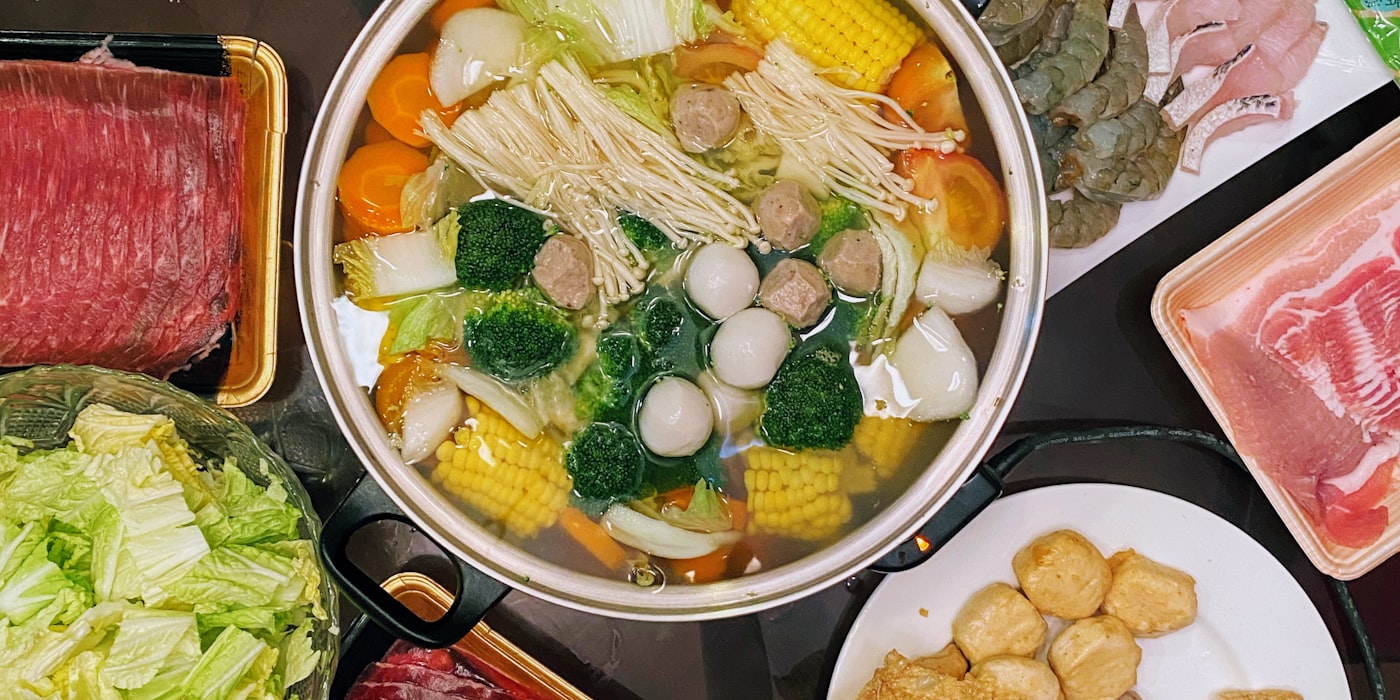
On the communal steamboat pot, the Peranakan kitchen, and the slower, quieter side of eating in George Town.

How to Fall Asleep Faster
The small, evidence-backed habits that make the difference between lying awake and drifting off with ease.