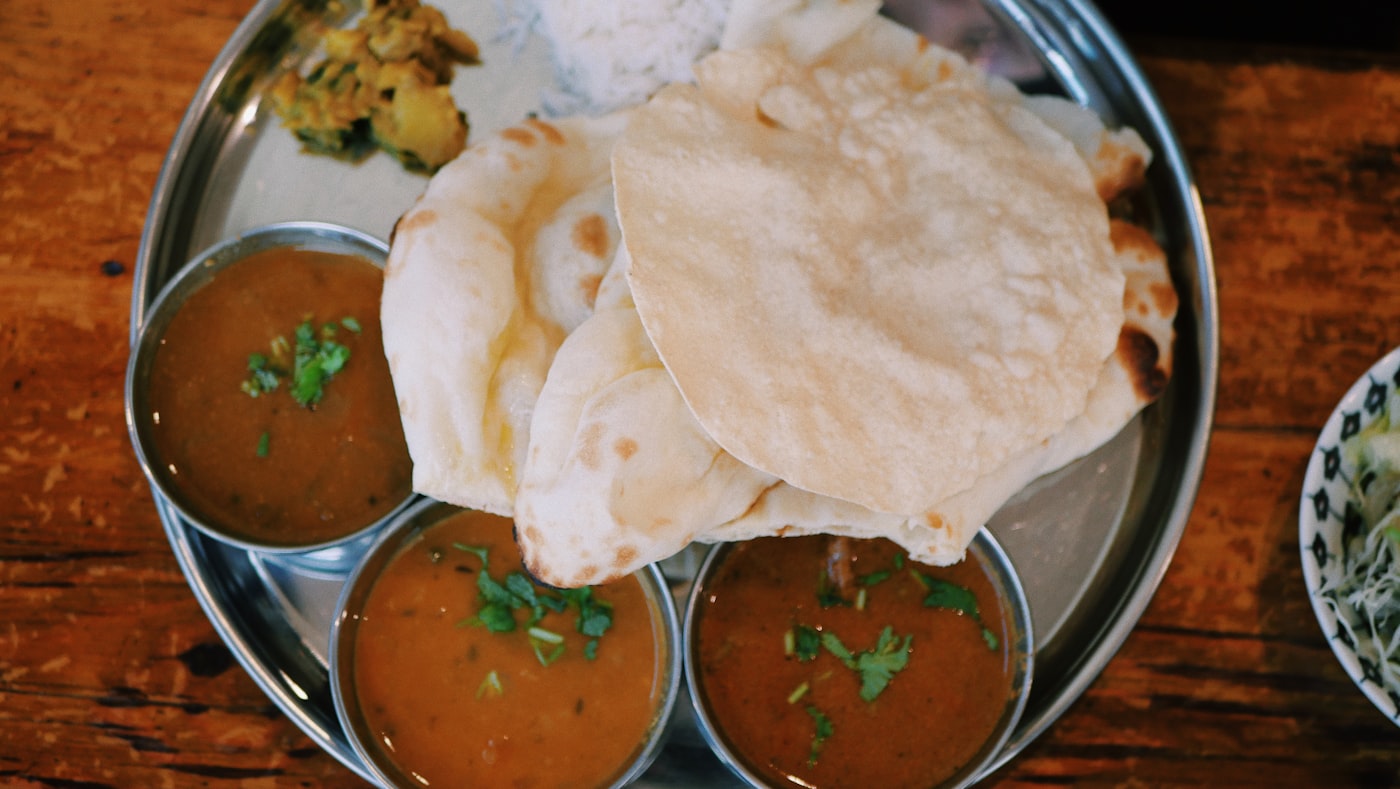
Nasi Kandar in Penang
On the ritual of the kandar counter, the logic of stacking sauces, and why Penang's most beloved dish is best understood as a conversation rather than a meal.
The servers at Line Clear work fast. You hold out your plate — a mound of white rice, basmati if you know to ask — and they begin before you have finished pointing. A ladle of mutton curry here. The fish that has been sitting in a dark, tamarind-heavy gravy since before you woke up. Half a boiled egg, its yolk firm and yellowed at the edges. The thin, oily dhal that runs everywhere and mingles with everything else. By the time you reach the end of the counter the plate is a small catastrophe of flavour, all the sauces bleeding together, and the man who takes your money has already seen ten thousand plates like it and finds yours entirely unremarkable.
This is nasi kandar. It is not a recipe. It is a system.
The dish takes its name from the kandar — the shoulder pole that Indian Muslim traders used to carry their food through the streets of Georgetown in the nineteenth century. The pole balanced two containers: one of rice, one of curry. The seller stopped, you ate where you stood, and the meal was over in the time it took to eat it. The kandar vendors are gone now, replaced by restaurants that have been operating in the same shophouses for decades, but something of the street remains in the experience — the efficiency, the communality, the sense that you are participating in something that has its own practised logic and does not require your input beyond showing up.
Penang takes nasi kandar seriously in the way that cities take seriously the things they believe they do better than anywhere else. The debate over which restaurant is the best is genuinely felt. Line Clear is the famous answer, open since 1959 in a lane off Penang Road, reachable by ducking under a shophouse arch. Hameediyah, on Campbell Street, is older and quieter and has a certain unhurried dignity. Nasi Kandar Pelita has branches that stay open past midnight, which is a different kind of argument for its quality. I have been to all of them. I have not resolved the debate.
What I have come to understand is that the quality of nasi kandar is only partly about the individual curries. It is about the kuah campur — the mixed sauces. Each ladle poured over the rice releases new compounds into the pool forming at the plate’s centre, and the mixture at the end is different from the sum of its parts. You eat the meal from the outside in, the sauce deepening as you go, the rice at the centre absorbing everything. The last forkful is the best forkful. This is not an accident.
The Indian Muslim community brought this food to Penang with the spice trade, the same historical current that brought everything worth eating in this city. Georgetown’s food culture is a record of those migrations, each community maintaining its own traditions while the traditions inevitably cross-pollinate at the edges. Nasi kandar sits at one of those edges — it is Tamil Muslim in origin, Penangite in practice, and belongs now to everyone on the island regardless of background. The office workers at the next table at Line Clear speak a mixture of Malay, Hokkien, and English in a single sentence. The food operates the same way.
Go early if you can, before the lunchtime queue assembles. Order the chicken curry if you are uncertain — it is the reliable introduction. Order the sotong if you are not. Point at the dhal and the fish and let the server make the rest of the decisions; they have made them before and their instincts are better than your deliberation. When the plate arrives, it will not look like the photographs online, where everything is arranged carefully and the colours are distinct. It will look like what it is: a working meal, sauce-stained, abundant, already doing the thing it is supposed to do before you have taken the first bite.
Pay at the end. Return to whatever part of Georgetown you are exploring that day. The rest of the afternoon will taste better for it.
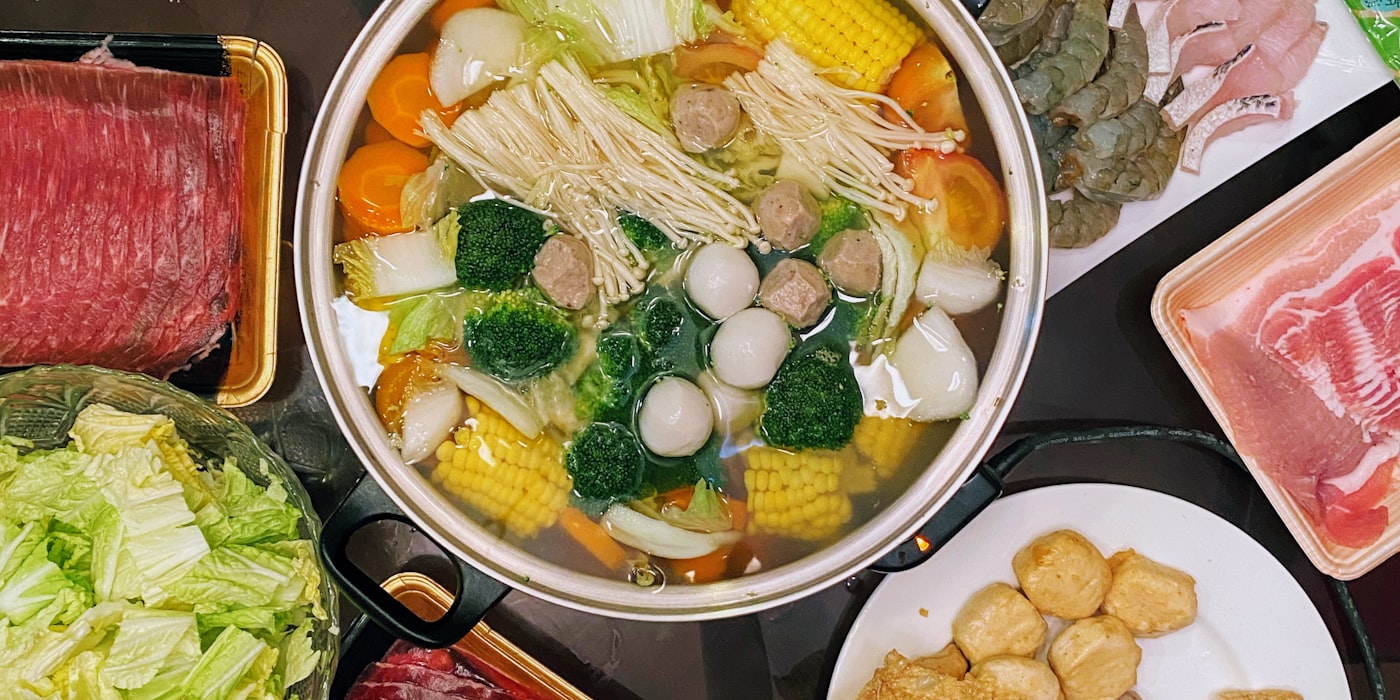
Steamboat Nights and Nyonya Kitchens: The Other Penang Table
On the communal steamboat pot, the Peranakan kitchen, and the slower, quieter side of eating in George Town.

How to Fall Asleep Faster
The small, evidence-backed habits that make the difference between lying awake and drifting off with ease.